Ask Quantara: What Are the Top Risks in My Enterprise and How Can AI Help Mitigate Them?
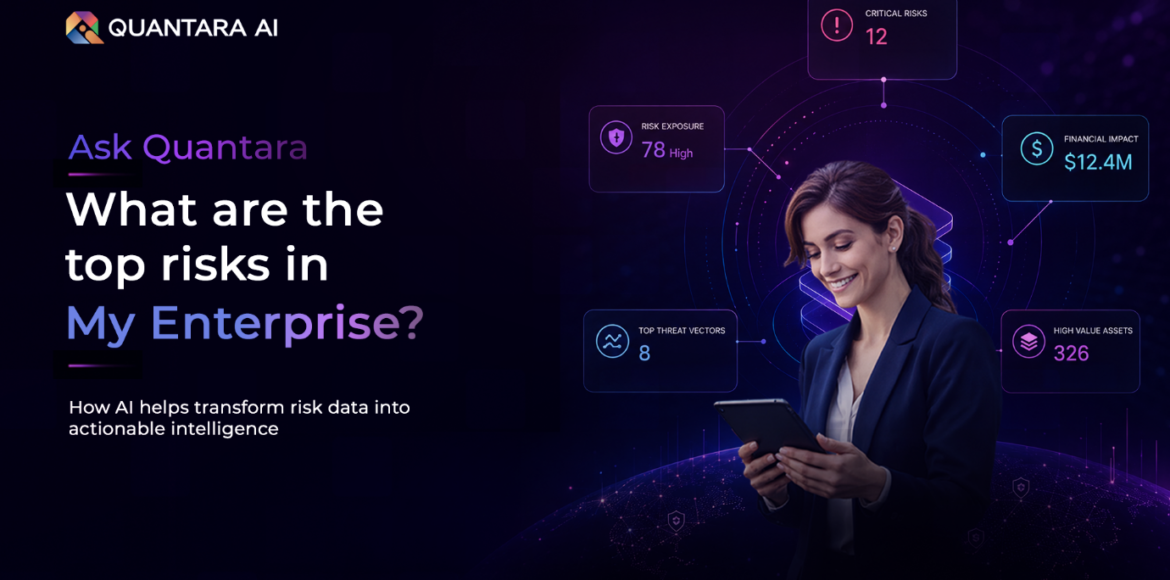
One of the most common questions security and risk leaders ask today is:
“What are the top risks in my enterprise?”
Despite having access to more security data than ever before, many organizations still struggle to answer this question with confidence.
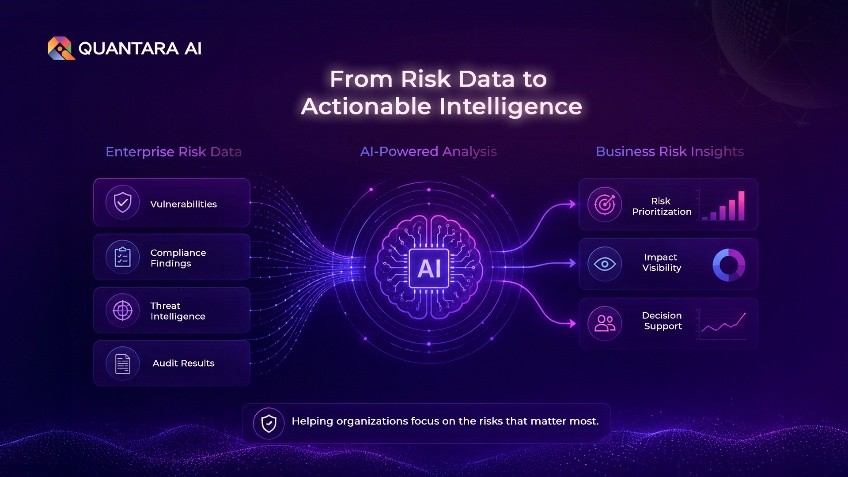
Every day, enterprises generate information from vulnerability assessments, compliance reviews, audits, threat intelligence feeds, cloud environments, and operational systems. While this data provides visibility into potential issues, it does not always provide clarity on which risks matter most.
As organizations continue to expand their digital footprint, identifying and prioritizing enterprise risk has become increasingly complex.
The challenge is no longer finding risks.
The challenge is understanding which risks have the greatest potential impact on the business.
Looking Beyond Security Findings
Traditionally, organizations have relied on lists of vulnerabilities, compliance gaps, and security findings to guide decision-making.
However, enterprise leaders need more than a catalogue of issues.
They need answers to questions such as:
- Which risks could disrupt critical business operations?
- Which assets require immediate attention?
- Where should resources be allocated first?
- Which risks deserve executive visibility?
These questions require organizations to move beyond technical observations and evaluate cyber risk through a business lens.
When cyber risks are connected to business functions, operational dependencies, and strategic objectives, decision-makers gain a clearer understanding of their overall risk posture.
How AI Helps Bring Clarity to Complex Risk Environments
Modern enterprises operate in highly dynamic environments where risk information is distributed across multiple systems and teams.
Analyzing this information manually can be time-consuming and difficult, particularly when risk conditions are constantly changing.
AI helps address this challenge by assisting organizations in processing large volumes of data more efficiently.
By analyzing information from multiple sources, AI can help identify patterns, highlight areas of concern, and support a more comprehensive view of enterprise risk.
Rather than treating risks as isolated events, AI enables organizations to evaluate risk information within a broader context.
This helps security and risk teams focus their attention on issues that may require action while reducing the noise often associated with large volumes of data.
From Risk Visibility to Risk Prioritization
Having visibility into risk is important.
Knowing where to act is even more important.
One of the greatest benefits of AI-supported risk analysis is its ability to assist with prioritization.
Organizations often face hundreds or even thousands of potential risk indicators across their technology landscape. Not every issue presents the same level of exposure, and not every finding requires the same response.
AI can help organizations evaluate risk information more effectively, enabling teams to focus on the risks that are most relevant to business objectives and operational resilience.
This allows security leaders to make more informed decisions regarding mitigation efforts, resource allocation, and risk management strategies.
Supporting Better Enterprise Decisions
Cyber risk management is increasingly becoming a business-wide responsibility.
Executives, risk managers, compliance teams, and operational leaders all require access to meaningful risk insights.
For these stakeholders, technical details alone are often insufficient.
What matters is understanding how cyber risks may affect business outcomes.
AI can help transform complex risk information into insights that support:
- Risk governance discussions
- Executive reporting
- Strategic planning
- Enterprise Risk Management initiatives
- Business resilience planning
This creates stronger alignment between cybersecurity activities and organizational priorities.
Turning Risk Data into Actionable Intelligence
As cyber risk continues to evolve, organizations need more than visibility into security findings.
They need the ability to identify, prioritize, and understand the risks that matter most.
AI plays an important role in this transformation by helping organizations convert large volumes of risk data into actionable intelligence.
The objective is not to replace human expertise, but to enhance decision-making through greater clarity and context.
When organizations can clearly understand their risk landscape, they are better positioned to prioritize resources, support business objectives, and strengthen overall resilience.
The question is no longer whether enterprises have risk data.
The real question is whether they can transform that data into the intelligence needed to make confident, risk-informed decisions.