What Is Considered a Material Cyber Risk Under the New US SEC Rules?
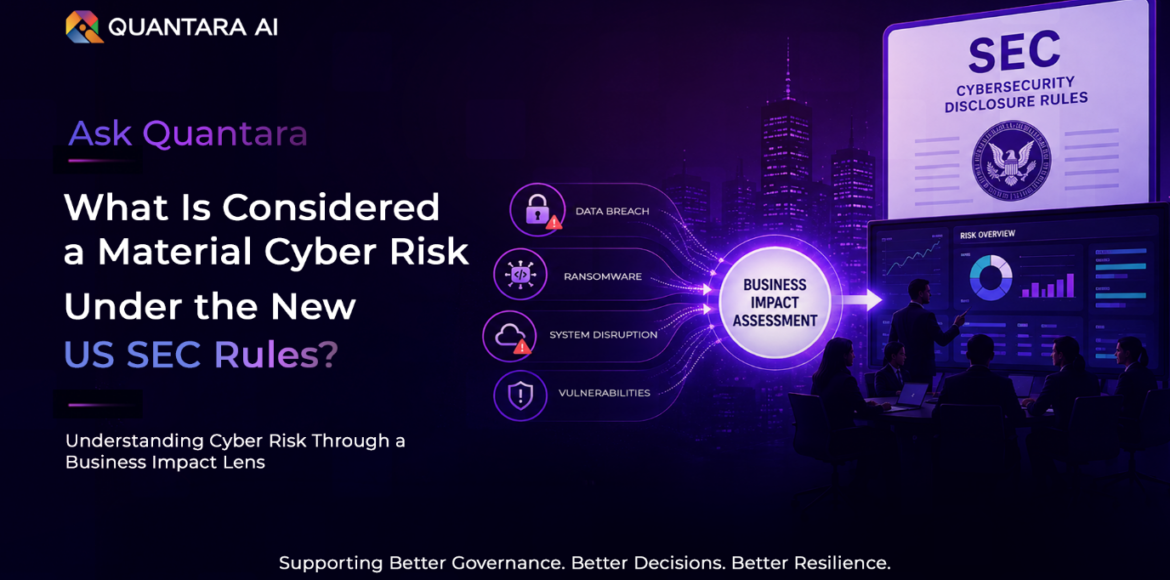
Cybersecurity is no longer viewed solely as an IT concern—it has become a matter of business resilience and corporate governance. Recognizing this shift, the U.S. Securities and Exchange Commission (SEC) introduced new cybersecurity disclosure rules that require public companies to report material cybersecurity incidents and provide greater transparency into their cyber risk management practices.
This raises an important question for business leaders:
What exactly qualifies as a “material” cyber risk?
The answer goes beyond the technical severity of a cyber incident. Under the SEC’s framework, materiality is determined by whether a reasonable investor would consider the information important when making investment decisions. In other words, organizations must evaluate cyber risks based on their potential business impact—not just the technical details of the event.
Looking Beyond Technical Impact
Not every cyber incident is considered material. A vulnerability or security event may be significant from an operational perspective but may not necessarily require disclosure under the SEC rules.
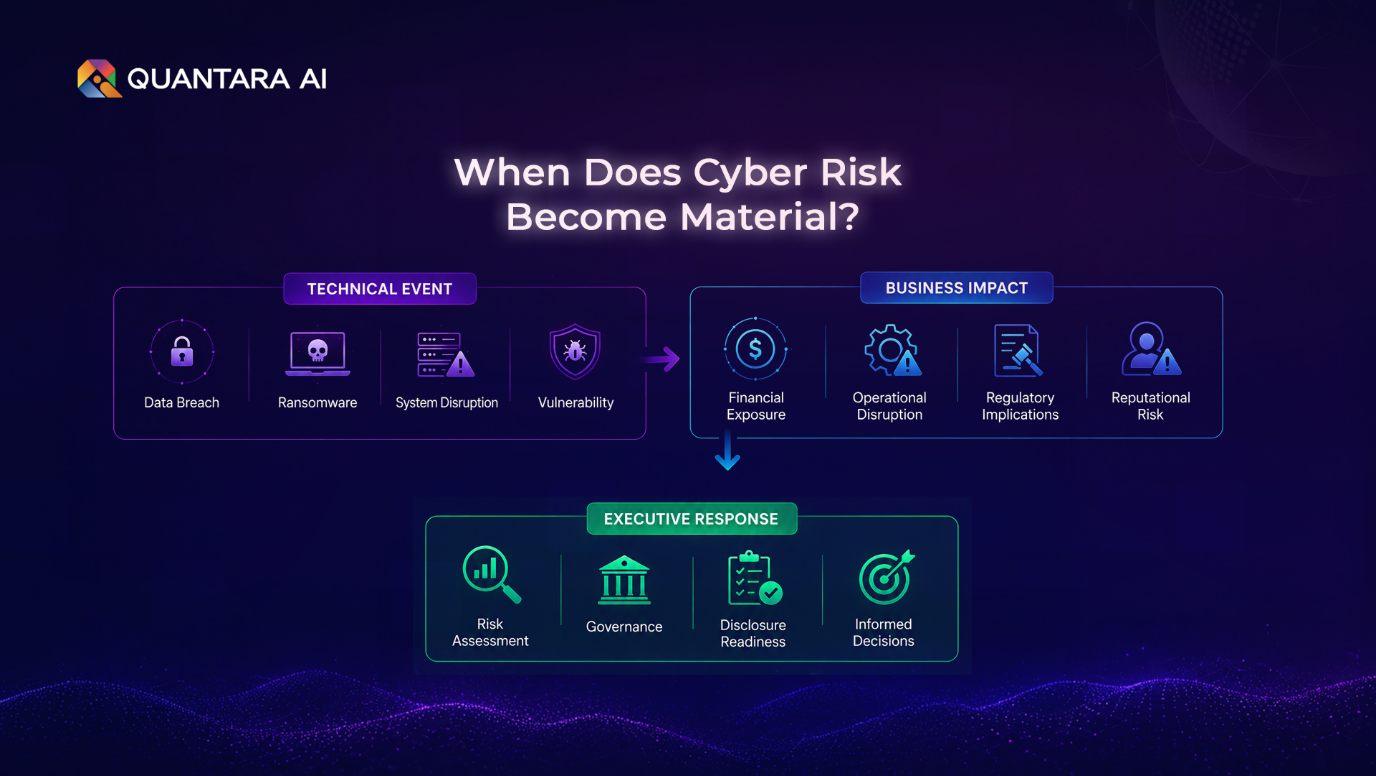
Organizations should evaluate whether a cyber event could materially affect:
- Business operations
- Financial performance
- Reputation and customer trust
- Strategic objectives
- Legal or regulatory obligations
This shift encourages organizations to assess cyber risks within the broader context of enterprise risk management rather than treating cybersecurity as an isolated technical function.
Why Business Context Matters
Determining materiality requires more than identifying a security incident. Organizations must understand how that incident could influence critical business functions and stakeholder confidence.
This requires collaboration across cybersecurity, risk management, legal, compliance, and executive leadership. Together, these teams can evaluate the broader implications of cyber events and support informed decisions regarding risk management and disclosure obligations.
Having clear visibility into cyber risk also enables leadership teams to communicate more effectively with boards, regulators, and investors.
Supporting Better Cyber Risk Decisions
As regulatory expectations continue to evolve, organizations need a structured approach to understanding and prioritizing cyber risk.
Rather than focusing solely on technical findings, organizations should develop the ability to assess risks through a business lens—considering potential operational, financial, and strategic consequences.
This approach supports stronger governance, improves enterprise-wide risk communication, and enables more informed decision-making.
Final Thoughts
The SEC’s cybersecurity disclosure rules reinforce an important reality: cyber risk is business risk.
Understanding whether a cyber event is material requires organizations to look beyond technical indicators and evaluate its potential impact on the enterprise as a whole.
By integrating cybersecurity into broader risk management processes, organizations can improve visibility, strengthen governance, and make more confident, risk-informed decisions in an increasingly complex threat landscape.